
Build the choice around the waste list
A flooring replacement, multi-room clear-out or moderate renovation can all produce a 20-yard enquiry for different reasons. Furniture occupies volume; tile, roofing and other dense debris add weight rapidly. Tell the advisor which materials dominate and whether the job will happen in one phase or over several visits.
If contractors are loading the bin, make sure they know what the disposal plan permits. A container intended for approved household material should not become an unplanned destination for concrete, paint or another trade’s waste.
Dimensions must be confirmed locally
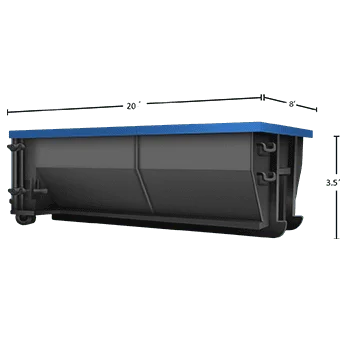
ASAP’s source material describes examples around 22 feet long and 8 feet wide, but gives differing side heights on different pages. This website therefore does not present one height or weight allowance as a guaranteed specification. Request the actual container dimensions and included weight in the quote.
Measure more than the parking rectangle. Account for truck approach, overhead obstacles, the loading door and the route needed at pickup. A bin can fit in a space while the delivery vehicle cannot safely place it there.
Plan the loading period and the final collection
Keep waste below the provider’s fill line and within the agreed material and weight conditions. Heavy roofing or masonry should not be filled to the same visual level as light household debris. Obtain an explicit loading limit for any approved dense material.
Compare a 15-yard option when the removal list is smaller and a 30-yard option when bulky contents dominate. If the project runs late, contact the advisor before the agreed end date. Ask whether pickup is prearranged or must be requested; do not assume the container disappears automatically.